About this stencil
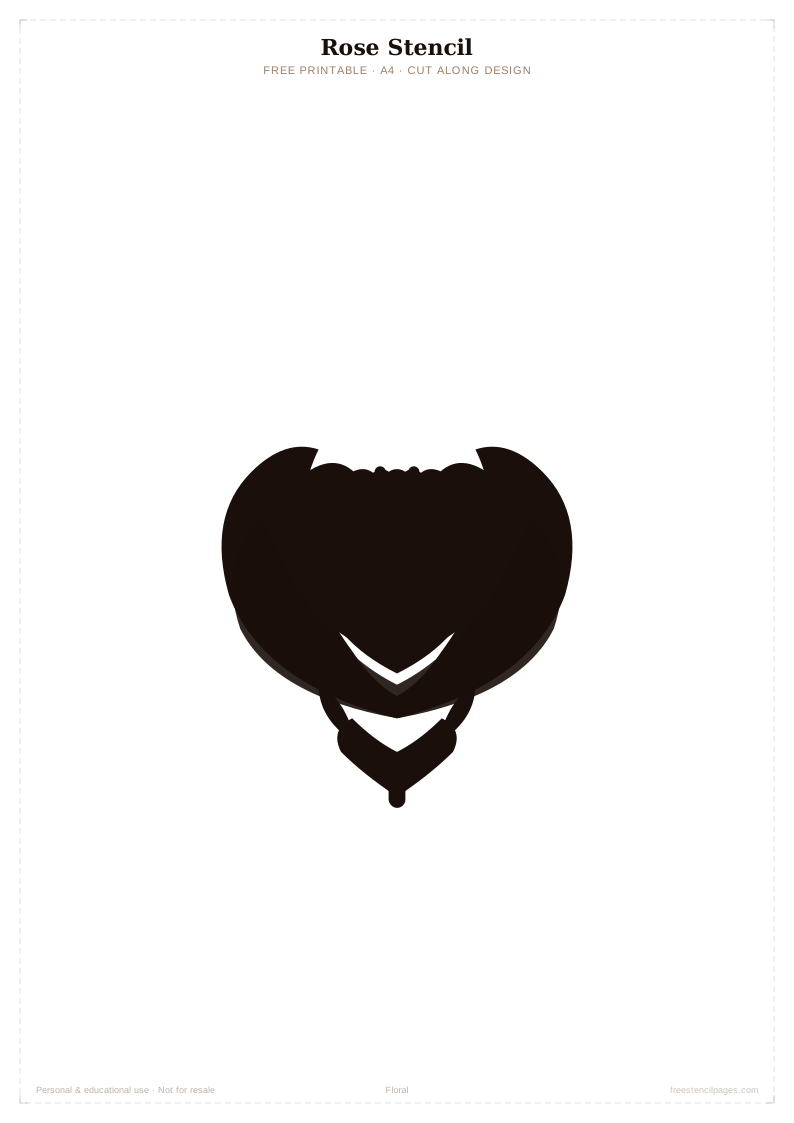
A rose stencil sits in an interesting middle ground between a simple bold shape and a genuinely detailed design. The petals have enough overlap and layering to look like a real rose rather than a stylised symbol, but the design is structured enough to reproduce cleanly as a stencil without the fine bridges collapsing during cutting or application.
Where it differs from simpler designs is in what happens when the technique isn't quite right. A butterfly with slightly imperfect edges still looks like a butterfly. A rose with heavy paint bleed looks like a dark smudge with petals. That's why this is rated medium rather than easy — not because it's difficult in absolute terms, but because it rewards patience and dry brush technique more than a more forgiving design would.
Get those basics right, and the rose produces results that can look genuinely beautiful. It's a design that suits chalk paint furniture in ways that few others manage — there's something about a soft muted rose on a piece of painted furniture that looks considered and intentional rather than crafted, which is exactly the quality people are usually going for.
Best surfaces & materials
This design works across a wide range of surfaces. Here's what tends to give the best results on each one.
| Surface | Recommended paint | Notes |
|---|---|---|
| Furniture upcycling | Chalk paint over a chalk paint base | Seal with clear wax or varnish; metallic gold over grey is a classic combination |
| Feature wall | Low-sheen emulsion or chalk paint | Works best as a single large centrepiece rather than repeating pattern |
| Linen fabric | Fabric paint | Dusty rose or sage green on natural linen; heat-set with iron |
| Canvas artwork | Acrylic — deep red on cream, or metallic on dark | Frame as a finished piece; the rose holds up well at canvas scale |
| Greetings cards | Acrylic or chalk paint | Dark red or gold on cream card makes a beautiful handmade card |
How to use this stencil — step by step
Whether you're printing and cutting this yourself or uploading to a Cricut, these steps apply to most surfaces and paint types.
- Print at the scale that suits your surface. For furniture drawer fronts, 60–70% of A4 is usually right. For a wall centrepiece, 120–150%.
- Cut carefully with a craft knife — the petal overlaps are the most important areas to cut cleanly. Take your time here; a rushed cut shows in the finished result.
- Apply repositionable spray adhesive to the back and press firmly, paying particular attention to the centre of the design where the petals are most detailed.
- Use a round stencil brush or a piece of dense foam sponge. The sponge often gives better results on fabric; the brush is better for furniture and walls.
- Apply in a circular dabbing motion from the outside of the design inward. This reduces the risk of pushing paint under bridges in the centre.
- Peel slowly at a very low angle while the paint is still damp. On fabric, remove the stencil completely before the paint has any chance to dry.
For furniture: apply the rose in metallic gold chalk paint over a deep grey or navy base coat. Use a barely-loaded brush and apply two thin coats rather than one. Once dry, apply a coat of clear wax over the whole piece — it blends the stencilled design into the surrounding paint surface in a way that makes the rose look like it belongs there rather than sitting on top.
Project ideas for this design
Not sure where to start? These are some of the most popular ways people have used this particular stencil.
Furniture upcycle
Rose in metallic gold over chalk-painted grey furniture. A chest of drawers, a bedside table, a wardrobe door. Changes the character of a piece completely.
Valentine's canvas art
Deep red acrylic on cream canvas. Frame in black. Takes about 30 minutes and looks far more personal than anything shop-bought.
Linen cushion collection
Dusty rose fabric paint on natural linen cushion covers. Three cushions, one design, different scales. Cohesive and beautiful.
Handmade gift wrap
Gold metallic paint on kraft paper, scattered rose repeat. Ten minutes of work, the kind of wrapping people comment on.
Bathroom feature wall
Single large rose in pale grey on white above the bath or basin. Subtle enough to work in a small space.
Related stencils you might like
Frequently asked questions
Is the rose stencil suitable for a beginner?
It's manageable for a first project if you take care with technique — particularly using a nearly dry brush and spray adhesive. The butterfly or star would be slightly more forgiving as a very first stencil, but the rose isn't far behind.
What's the best paint for a rose stencil on furniture?
Chalk paint gives the best results on furniture — the right consistency, dries quickly, and the matte finish suits the design. Apply over a chalk paint base coat and seal with wax or varnish once dry.
Can I stencil a rose on fabric?
Yes — use fabric paint applied with a sponge. Heat-set with an iron once dry. The rose works particularly well on natural linen in muted colours.
Why does my rose stencil look blurry?
Most likely too much paint. The rose has detailed petal overlaps in the centre where paint bleed is most visible. Use much less paint than you think you need, and work from the outside of the design inward.