Download all number stencils free
Click any number to go to its download page, or download directly using the button below each one.
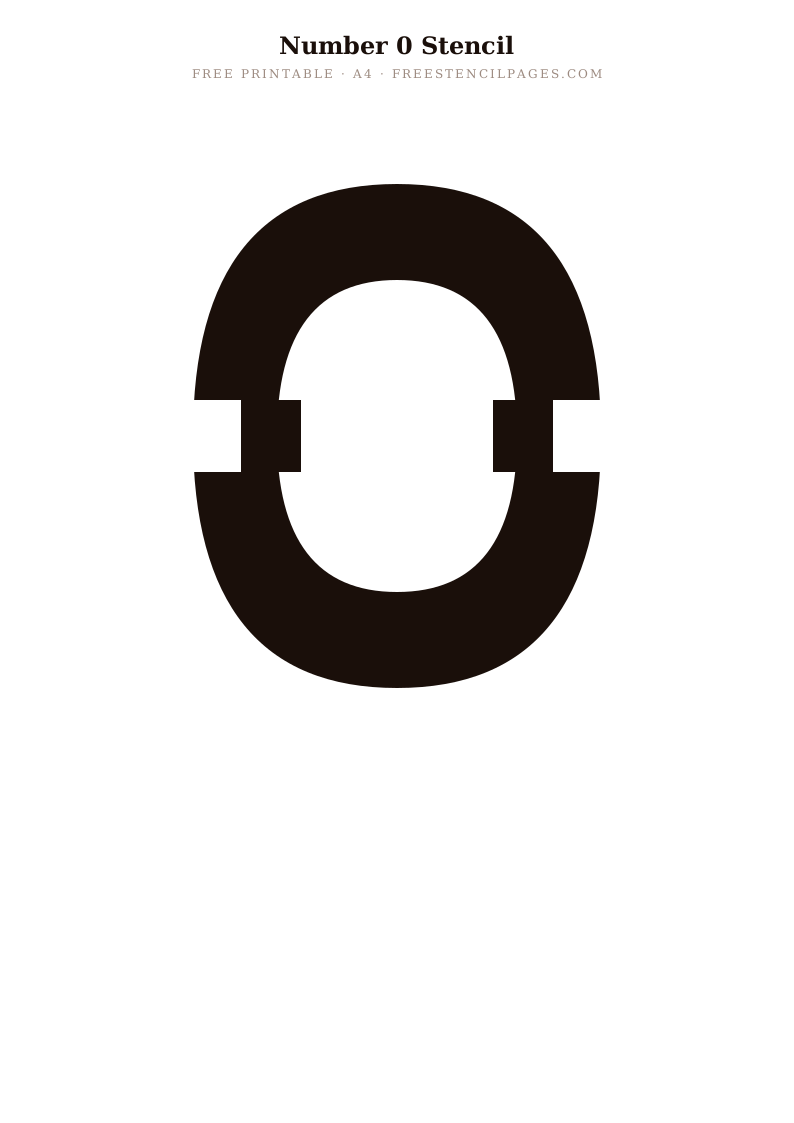



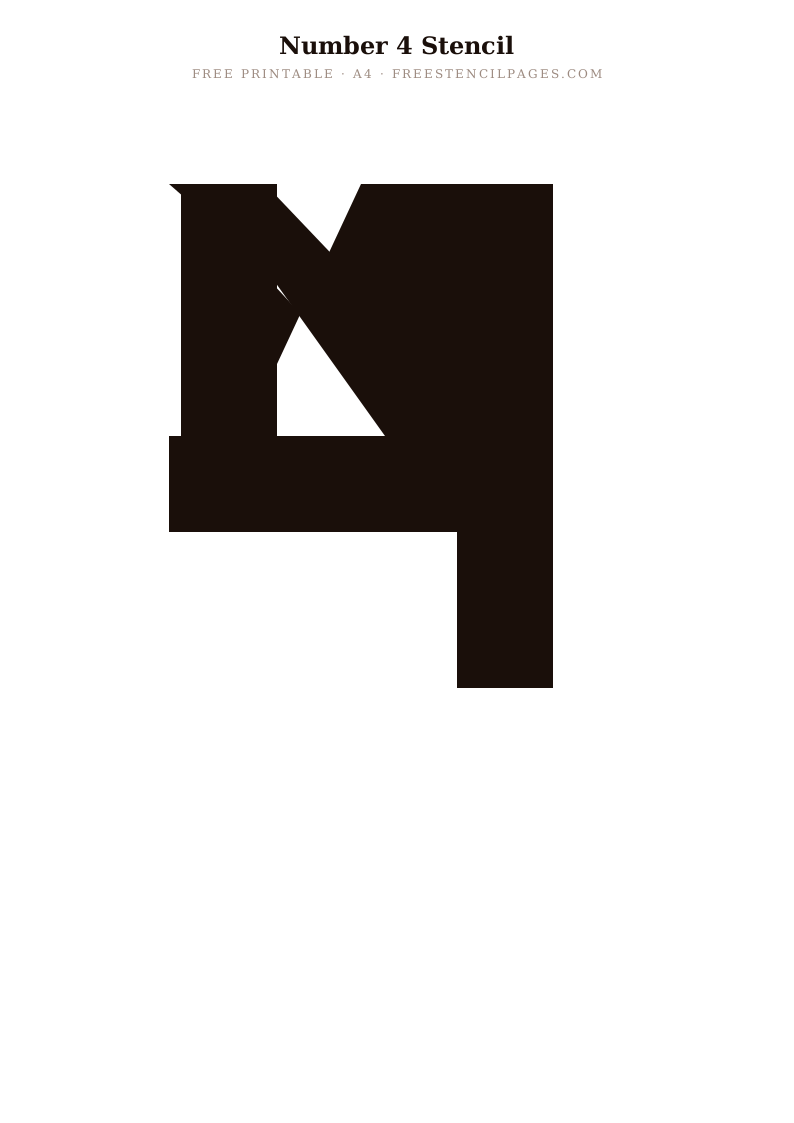



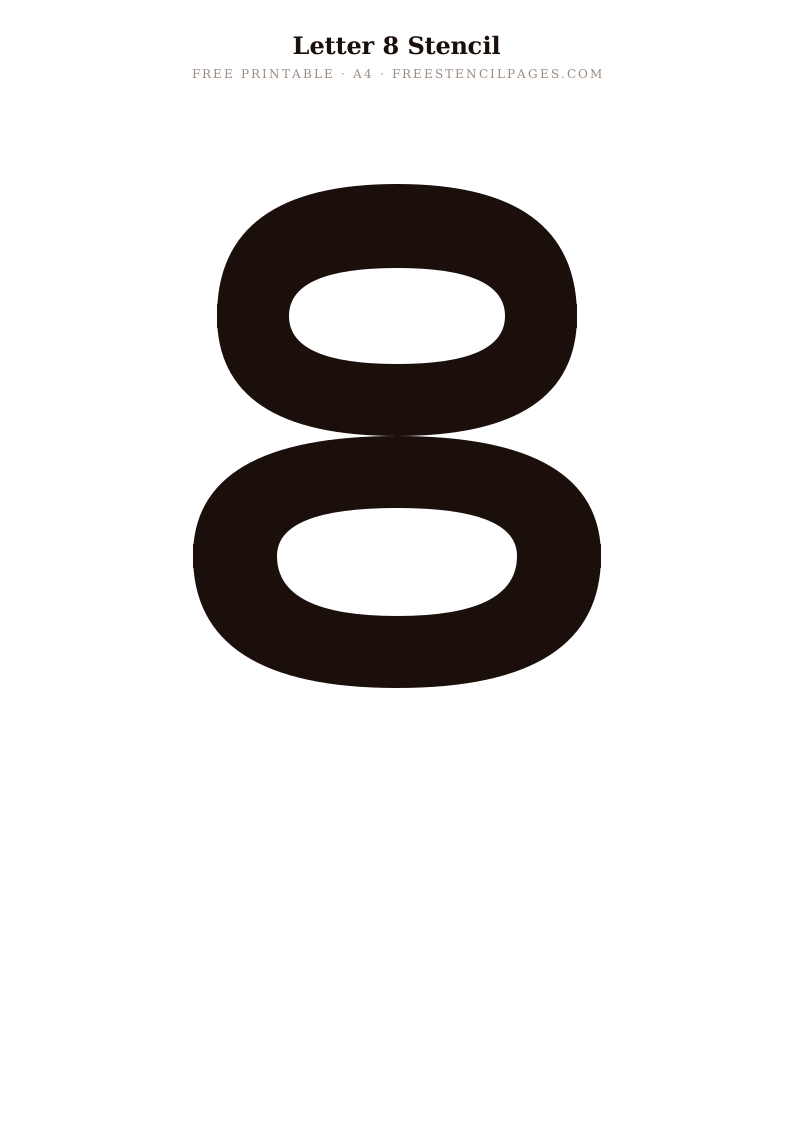
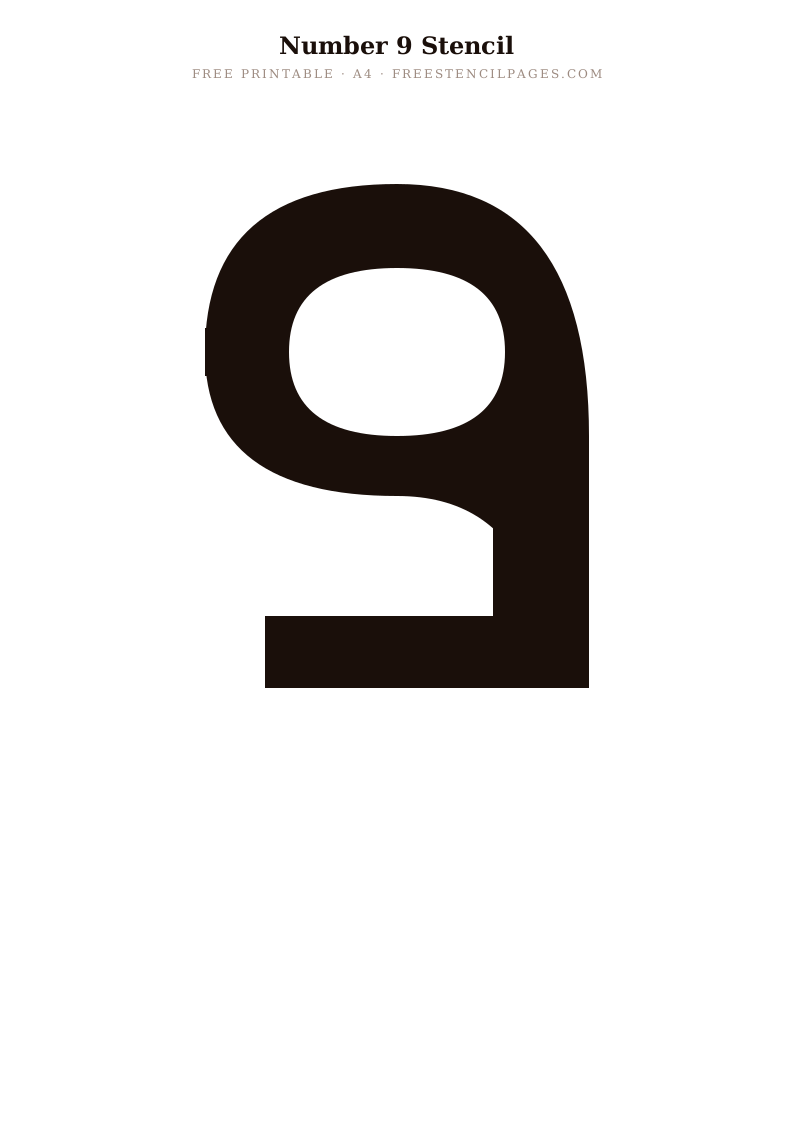
Full letter and number set: The Letters & Numbers category page has the complete A–Z alphabet alongside all 10 digits (0–9), in the same consistent serif font. All 36 characters free to download.
What can you make with number stencils?
Number stencils serve a far wider range of purposes than most people initially think of. The most obvious is house numbers — a freshly painted door number in bold black or metallic gold immediately improves the look of any front door and takes under ten minutes to apply. Beyond that:
- Birthday decorations — the age number on balloons, a cake board, a banner backdrop or gift wrapping. Particularly popular for milestone birthdays: 30th, 40th, 50th and 60th in gold metallic are perennially requested.
- Sport kit numbers — apply to the back of T-shirts and sports jerseys using fabric paint. Heat-set with an iron for a washable, durable result that is far cheaper than custom printing.
- School and classroom activities — number stencils help children learn to recognise and write numerals. Free for educational use, print on laminated card for a reusable classroom resource.
- Event and party decoration — room number signs, table numbers, seating plan numbers, countdown clocks and milestone celebration backdrops.
- Craft projects — personalised gifts, anniversary signs, custom frames and clocks.
How to use number stencils for a front door
Clean the surface thoroughly with a damp cloth and allow it to dry completely. Print the number stencil at your desired size — typically 60–70% of A4 gives a number around 12–15cm tall, which is a standard door number size. Cut carefully with a craft knife on a cutting mat, keeping the interior of closed digits (0, 6, 8, 9) intact as a floating island.
Secure the stencil with low-tack spray adhesive on the back, then apply two thin coats of exterior-grade acrylic paint using a nearly dry brush or foam roller. Peel while slightly damp. Once fully dry, apply a coat of clear exterior varnish for weather protection. The whole process takes about 20 minutes and the result looks far better than stick-on numbers.
How to make T-shirt numbers for sports kits
Print the number at approximately 80–90% of A4 for a standard back-of-shirt number (roughly 20cm tall). Cut the stencil from 160–200gsm card or, better, from stencil vinyl using a Cricut — the vinyl adhesive holds it perfectly flat to the fabric without spray adhesive. Apply fabric paint using a dense foam sponge in a gentle dabbing motion. Two thin coats give better coverage than one thick coat. Remove the stencil while damp. After the paint has dried for 24 hours, heat-set by placing baking paper over the design and ironing on medium heat (no steam) for 30 seconds per section. The result is washable and durable.
Scaling number stencils to different sizes
Because all the files are SVG (vector) format, they scale to any size with no loss of quality. For a small gift tag, print at 20–30% of A4. For a large birthday party backdrop banner, take the SVG file to a print shop and request A0 or even larger output. The number will be just as crisp at 1 metre tall as it is at 10 centimetres. See the guide on how to resize stencils for step-by-step instructions on each method.
Tips for clean number stencilling
🔒 Closed digits need care
Numbers with enclosed areas — 0, 6, 8, 9, and sometimes 4 — have interior sections called "islands" that need to be held in place. Cut carefully and keep the islands — they are what makes the number recognisable.
📐 Align with a spirit level
Nothing looks worse than a crooked house number. Always mark a horizontal baseline with a spirit level and pencil before applying any stencil. Even a 1-degree tilt is clearly visible from a distance.
🏠 For outdoor use
Use exterior-grade acrylic paint and seal with two coats of clear exterior varnish once fully dry. This protects against rain, UV fading and temperature changes. A properly sealed stencilled house number should last 5+ years.
🎽 For fabric kit numbers
Cut stencil vinyl with a Cricut for the best results — the adhesive backing holds every edge perfectly flat to the fabric. Use fabric paint, apply with a sponge, and heat-set with an iron. Machine washable once set.
Related stencils and guides
Frequently asked questions
Are number stencils free to download?
Yes — all number stencils on this page are completely free for personal and educational use. Download as A4 SVG files instantly, no account needed. The full set covers 0 through 9.
What size are the number stencils?
The default size is A4 (210 × 297mm) portrait, which makes each number approximately 18–22cm tall depending on the digit. You can scale them smaller (50% for roughly 10cm tall) or larger using your printer settings or Canva and Inkscape. SVG files scale to any size without losing quality.
Can I use number stencils for a front door address?
Yes — this is one of the most popular uses. Print at around 60–70% of A4 for standard door number sizing (roughly 12–15cm tall). Cut from 200gsm card or Mylar, then apply in metallic gold, silver or gloss black paint to a clean dry surface. Seal with exterior varnish for outdoor durability.
What is the best paint for number stencils on a letterbox or wall?
For outdoor surfaces, use exterior-grade acrylic paint or spray paint, then seal with clear exterior varnish once dry. For interior walls, chalk paint or standard matt emulsion both give clean results. For metal letterboxes and door furniture, use metal primer first, then paint, then a clear seal.
Can I use number stencils for a birthday party?
Absolutely — number stencils are perfect for milestone birthday decorations. Use the relevant age number on balloons (with fabric paint), cake board covers, banner designs, and gift wrapping. For a 30th, 40th, 50th or 60th birthday, a large gold number stencilled on kraft paper makes a striking backdrop.
How do I space multiple numbers correctly?
Cut your number stencils and do a dry run — hold them against the surface without paint to check spacing. Use a spirit level and pencil to mark a baseline guide, and cut small registration marks into each stencil so they sit at consistent heights. For house numbers, standard spacing between digits is roughly 20–30% of the number height.