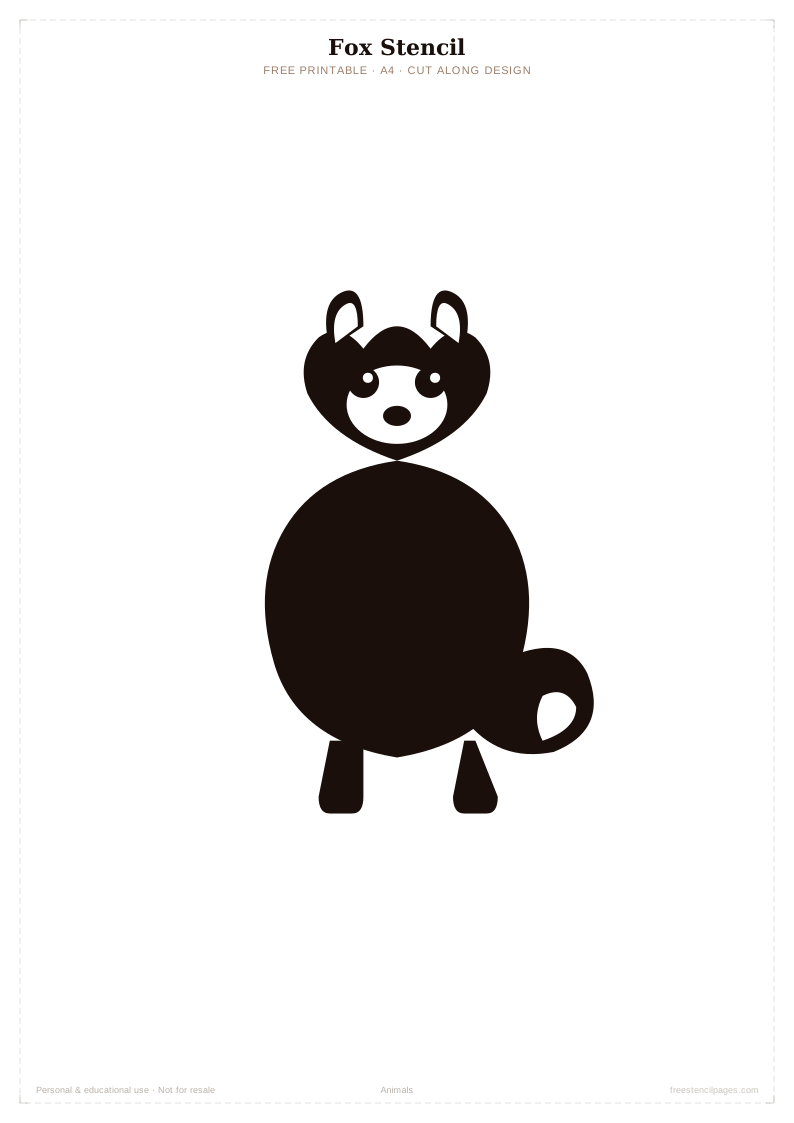
About this stencil
The fox has a particular quality among animal stencils: it manages to be both charming and slightly sophisticated. It works in a child's nursery without looking babyish, and in a modern adult interior without looking like it belongs in a children's bedroom. That balance is genuinely difficult to achieve in a stencil silhouette.
Technically, it's one of the more accessible designs in the collection. The main body and tail are bold shapes with good bridge connections; the ear detail is fine but not so fine that it causes problems during cutting or application. Most people are satisfied with their first attempt at the fox, which isn't true of all medium-complexity designs.
The warm terracotta and orange tones that naturally suit a fox stencil also happen to work beautifully with the current direction of interior colour palettes — warm neutrals, earthy tones, natural textures. This is partly why the fox continues to be downloaded more consistently than designs that might initially seem more distinctive.
Best surfaces & materials
This design works across a wide range of surfaces. Here's what tends to give the best results on each one.
| Surface | Recommended paint | Notes |
|---|---|---|
| Nursery wall | Chalk paint — warm terracotta, soft grey, or sage | Pairs beautifully with the owl and deer designs at similar scale |
| Linen cushion | Fabric paint — warm rust or burnt orange | Natural linen base; heat-set; the colour combination is hard to beat |
| Tote bag | Fabric paint | Earthy tones on natural canvas; a quick and popular craft project |
| Gift wrap | Acrylic — terracotta or deep orange | Repeat print on kraft paper; instant personalised wrapping |
| Wooden decoration | Chalk paint or pyrography | As a standalone hanging piece or part of a woodland wall display |
How to use this stencil — step by step
Whether you're printing and cutting this yourself or uploading to a Cricut, these steps apply to most surfaces and paint types.
- Print at the scale that suits your project. For nursery walls, 80–100% of A4 is usually right. For cushions or bags, 70–85%.
- Cut the design from 160–200gsm card. The tail is the most important section to cut cleanly — take your time here.
- Apply repositionable spray adhesive to the back and press firmly. Pay particular attention to the ear tips and the narrow sections between legs.
- A sponge works well for the fox — the large filled areas of the body benefit from even coverage, which is easier with a sponge than a brush.
- For a multi-colour fox: apply the main body first, allow it to dry, then mask the relevant sections with tape and apply a second colour to the chest and tail tip.
- Peel carefully, clean the stencil, and allow the painted surface to dry fully before handling.
Two-tone fox technique: Cut a second copy of the stencil and mask out the tail and chest area with tape. Apply the body in deep rust or terracotta. Once dry, apply the tail and chest area in cream or pale gold using the masked version. The effect is close to a realistic fox colouring and looks considerably more complex than it actually is to achieve.
Project ideas for this design
Not sure where to start? These are some of the most popular ways people have used this particular stencil.
Woodland nursery wall
Fox alongside owl and deer on a pale nursery wall in warm grey chalk paint. The classic woodland trio.
Linen cushion cover
Warm rust or burnt orange fox on natural linen. One of the most satisfying quick fabric projects on the site.
Personalised gift wrap
Scattered foxes in terracotta on kraft paper. Autumn birthday presents wrapped in this get genuinely commented on.
Children's artwork frame
Apply the fox in a frame around a child's artwork or name on their bedroom wall. Personalised, non-permanent (chalk paint), and easy to update.
Seasonal bunting
Fox at 50% on triangular card cut-outs in warm autumnal tones. String between trees for a woodland party decoration.
Related stencils you might like
Frequently asked questions
What colours work best for a fox stencil?
Warm terracotta, burnt orange, rust and deep amber are the obvious choices. For a more subtle interior, warm grey or sage green can work surprisingly well — the fox silhouette reads clearly even without the expected orange colouring.
Is the fox stencil suitable for a nursery?
Yes — one of the most popular nursery choices. Use non-toxic chalk paint in soft warm tones and seal with water-based varnish. Works perfectly for any woodland-themed or gender-neutral nursery.
Can I make a two-colour fox?
Yes — it takes a bit of patience but the result is worth it. Apply the body in terracotta first, then use tape to mask the body area and apply cream or pale gold to the tail tip and chest separately. Allow each colour to dry before applying the next.
How do I use the fox for gift wrapping?
Print at 50–60% of A4. Cut from card. Apply in terracotta acrylic on kraft paper using a sponge, repeating the motif in a loose scattered pattern. Let dry completely before wrapping. Ten minutes of work, and no one ever throws it away without feeling slightly guilty.