About this stencil
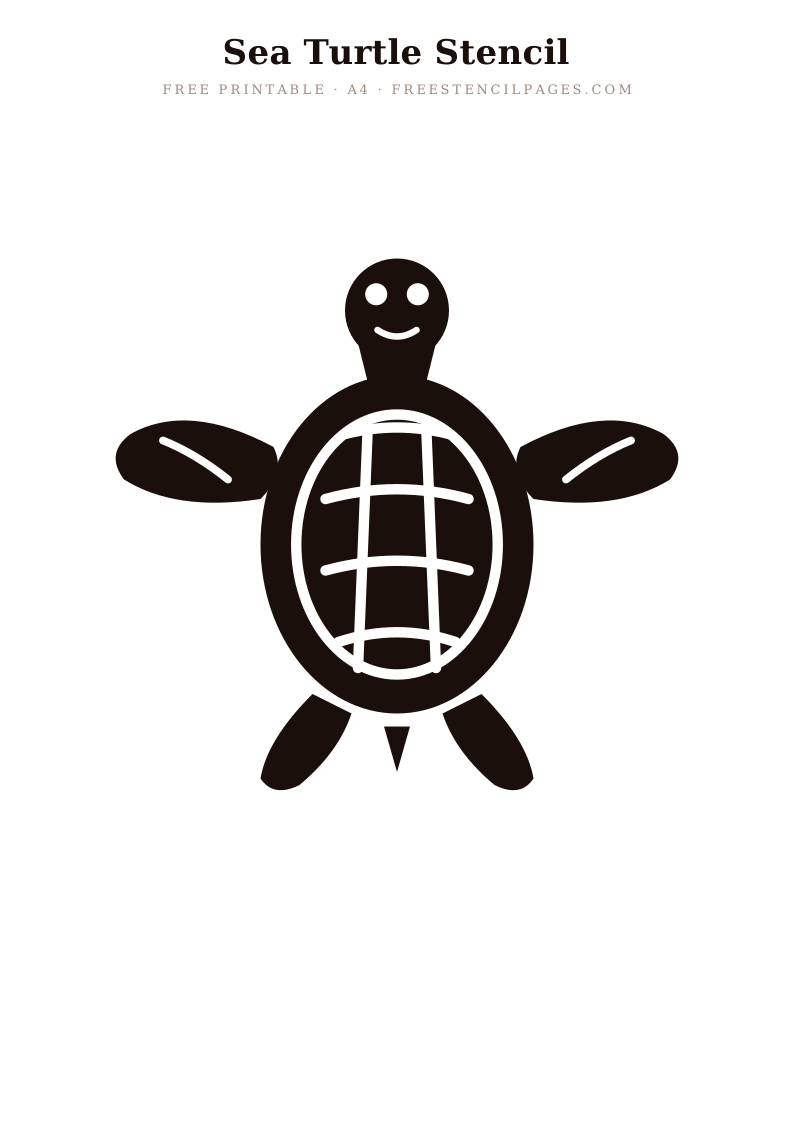
Turtles carry a lot of affection, and in coastal and bathroom decorating they have become the motif of choice, gentler than an anchor, more characterful than a shell. This one is drawn from directly above, which is the view that reads best flat on a wall or a bag.
The shell pattern is the detail that lifts it. The hexagonal scute lines paint as fine unpainted channels across the shell, exactly like the real plates, and because they are engraved lines rather than floating islands the stencil stays strong.
The medium rating comes entirely from those shell lines if you are cutting by hand; they want a steady hand and a fresh blade. Skip them and you have an easy bold silhouette; keep them and you have something that looks far more considered than a free download has any right to.
Best surfaces & materials
Where this design earns its keep, and what to put on it.
| Surface | Recommended paint | Notes |
|---|---|---|
| Bathroom wall | Emulsion, soft blues or sage | A single large turtle above the bath, or a diagonal pair |
| Beach and tote bags | Fabric paint | Full shell pattern shows beautifully on natural canvas |
| Coastal signs | Chalk paint on wood | Turtle plus a place name from our letter stencils |
| Kids bedroom | Emulsion | A family of three at descending sizes, swimming one way |
| Ceramic tiles | Enamel, cured | One turtle per tile as splashback accents |
How to use this stencil — step by step
- Choose full detail or bold silhouette. To skip the shell pattern, simply do not cut the scute lines; everything else is unchanged.
- Print at 100%. Hand cutters: cut the scute lines first with a fresh blade, then flippers, then the outline.
- Fix it very flat. The flipper tips are long and lift easily; a light mist of repositionable adhesive beats tape here.
- Dab the shell first, working outward, then the flippers and head with whatever is left on the brush; they suit being slightly lighter.
- On fabric, one firm pass with a foam dauber keeps the scute lines sharp; scrubbing blurs them.
- Peel while tacky, and clean paint out of the scute channels before it dries or the next print loses the pattern.
The swimming family: print the turtle at 100%, 70% and 45%, and place them on a gentle diagonal, all facing the same way. That diagonal is what makes them swim; a straight level row looks parked.
Project ideas for this design
Bathroom feature
One large turtle gliding above the tiles in soft sage or dusty blue. Ten minutes of painting, years of small joy.
Canvas beach bag
Full detail turtle in navy on natural canvas. The shell pattern makes it, so cut those lines for this one.
Coastal welcome sign
Turtle beside a beach house name on painted driftwood or a board. Seal well if it lives outside.
Swimming trio
Three sizes on a diagonal across a child's wall. See the tip above; the diagonal does the work.
Accent tiles
A turtle on every sixth plain tile in cured enamel turns a builder's splashback into a deliberate one.
Related stencils you might like
Frequently asked questions
Do I have to cut the shell pattern?
No. Leave the scute lines uncut and you get a strong simple silhouette that is genuinely easy. Cut them and you get the detailed version. Both come from the same download.
How do I keep the shell lines crisp over many uses?
Wipe the paint out of the channels while it is still wet, every single use. Dried paint in the fine lines is what blurs them. On card expect the detail to soften after a dozen uses; mylar keeps it indefinitely.
What colours suit coastal decor?
Dusty blue, sage, sand and navy on off white all work. One colour is enough; the shell pattern provides the interest that would otherwise need a second colour.
Can I use this on tiles?
Yes, with enamel or a dedicated tile paint, cured exactly as the tin says. Tape the stencil, dab very lightly, and give it the full cure time before the room steams up.